English

Statement of Intent

At Greenlands Community Primary School, we take pride in fostering a vibrant and text-rich learning environment that sparks the fires of creativity and imagination in our children. We make it our intention to cultivate passionate readers, instilling in them the love for diverse literature while empowering them to read fluently and expansively.

We are dedicated to moulding our children into adept writers, equipped with the ability to tailor their language and style to fit various purposes and audiences. We emphasise the importance of self-reflection and growth, encouraging our children to re-read, edit and refine their own work, as well as the work of their peers.

Central to our approach is the exposure of our pupils to a rich tapestry of vocabulary. We believe that a robust vocabulary is the key to unlocking the world of knowledge and expression. By immersing our children in a wide array of words, we equip them with the tools to decode new terms and confidently integrate them into their speech and writing.

Reading at home

Here is Miss Spedding, our Year One Teaching Assistant, reading with a Year One child. Please watch to learn some ideas that you could try out to support your child when reading at home.


English Gallery


English

Phonics

At Greenlands Community Primary School, children in the Foundation Stage and Key Stage One participate in daily phonics sessions lasting at least 20 minutes. Our phonics teaching follows the Red Rose Letters and Sounds scheme, developed by Lancashire’s team of educational advisers and consultants.

This systematic approach offers frequent opportunities for children to apply and consolidate reading and writing skills. New grapheme-phoneme correspondences are introduced in a clear, structured sequence. Consistency and progression are ensured through our school’s fidelity to the Red Rose Letters and Sounds programme.

The Red Rose Letters and Sounds programme provides a detailed and systematic framework for teaching phonics from Phase 2 to Phase 5. By the age of seven, the goal is for all children to become fluent readers, enthusiastic writers and accurate spellers.

For children needing additional support, we implement the Red Rose Bounce Back Intervention programme, delivered by trained and experienced teaching assistants across both key stages. The intent of this programme is to offer rigorous, targeted planning to help children in Year 2 and Key Stage 2, who are behind in their phonics knowledge, catch up with their peers in reading and writing.

Children in EYFS, Year 1, and those in the catch-up programme, are assessed using Phonics Tracker at least every half-term. This enables teachers to monitor progress and provide personalised interventions to meet each child’s needs.

In EYFS and Key Stage 1, children are given a decodable book that aligns with their phonics knowledge, allowing them to practise what they’ve learned. Additionally, they take home a library book to share with adults at home, fostering a love for reading.

Accurate pronunciation of phonemes is crucial in phonics instruction. The following video demonstrates the correct articulation of the phonemes taught in our phonics curriculum: https://www.youtube.com/watch?v=UCI2mu7URBc

Reading

Our English curriculum is built around a text-rich approach, with every unit designed around a carefully selected key text. These high-quality, ambitious texts are chosen to engage and challenge children, while developing their reading, writing and speaking skills.

Using key texts as the foundation for each unit has many benefits for children:

  1. Rich Vocabulary Exposure: By immersing children in texts with ambitious language, we help them build a broad and sophisticated vocabulary. This exposure enables children to absorb new words and phrases naturally, which they can then use confidently in their own writing and speaking.
  2. Improved Writing Skills: As children explore the structure, style and themes of the texts, they learn how to apply these ideas to their own writing. Whether it’s crafting a story, developing a persuasive argument or writing a report, children are encouraged to use the rich language and sentence structures they encounter in the key texts, helping them become more creative and effective writers.
  3. Enhanced Oracy: Through discussions, presentations, and debates centered around the texts, children practice using the new vocabulary and ideas they have learned. This helps develop their oracy—the ability to speak confidently and clearly—enabling them to express themselves with greater fluency and precision in a variety of contexts.
  4. Deepened Comprehension: Focusing on one key text per unit allows children to dive deeply into the story, characters, and themes. They don’t just skim the surface, but rather analyse and discuss the text in depth, improving their critical thinking and comprehension skills.
  5. Cross-Curricular Links: Many of our key texts link with other areas of the curriculum, such as history, science or geography. This helps children make connections across subjects, applying what they learn in English to broader topics and real-world contexts.
  6. Love for Reading: By exposing children to a range of genres, authors and styles through engaging and challenging texts, we aim to foster a lifelong love of reading. From classic literature to modern stories, our key texts are chosen to captivate and inspire their imagination.

Learning and Progression Steps

Assessment of Reading Skills
The Learning and Progression Statements are used to evaluate children’s reading abilities. Teachers assess children’s reading comprehension, decoding skills, fluency and vocabulary development against these clear, staged benchmarks. This assessment can be formative (ongoing) or summative (end of term or year) to get a detailed picture of a child’s progress.

Target Setting
By using the statements, we are able to set individual targets for children, ensuring that each child is working towards specific, achievable goals in their reading. This targeted approach helps to ensure that all learners, regardless of ability, are challenged and supported at the right level.

Planning Lessons and Interventions
The statements guide teachers in planning reading lessons and activities that are appropriate for the level of the children. They also inform interventions for children who may be struggling or for those who are exceeding expectations and need additional challenge. This ensures that every child’s reading journey is supported in a structured and purposeful way.

The Fantastic Book Awards 2024-2025

The Fantastic Book Awards (FBA) is an annual reading initiative organised by the Lancashire Library Service, designed to encourage reading for pleasure among children in Years 5 and 6. Participating pupils read a selection of age-appropriate books from a carefully curated shortlist, chosen for their engaging and diverse content.

At our school, we meet weekly to discuss how the children are finding the books, sharing thoughts and opinions as they progress through the reading list. Once a child completes a book, they write a book review and swap it with another club member. This peer-to-peer exchange helps deepen their understanding of the stories and fosters collaborative discussions.

The aim is for all participants to read every book on the shortlist. After completing the books, we vote on which one we believe is the best, providing reasons for our choices. The Fantastic Book Awards not only encourage a love of reading but also build critical thinking and discussion skills as children reflect on the merits of different stories and authors.

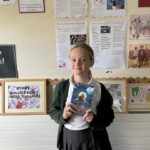
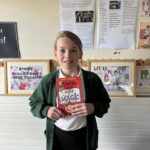
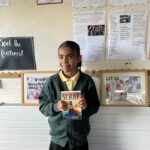
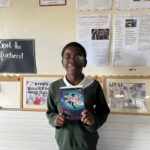
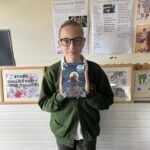
Here are some of our members holding their current reads!
Skip to content
Greenlands Primary School
Privacy Overview

This website uses cookies so that we can provide you with the best user experience possible. Cookie information is stored in your browser and performs functions such as recognising you when you return to our website and helping our team to understand which sections of the website you find most interesting and useful.