



Design and Technology Curriculum Statement 2026
At Greenlands Community Primary School, we aim to inspire creativity, imagination and problem-solving through Design and Technology. Pupils are encouraged to design, make and evaluate products for a specific purpose and user while developing their understanding of how design and technology shape the world around them. Design and Technology at our school follows a cycle of design, make and evaluate, informed by research and strengthened through the continuous application of technical knowledge. Pupils are encouraged to refine their ideas and products throughout the process, developing resilience, creativity and problem-solving skills as they work towards successful outcomes.
Curriculum Sequencing and Rationale
We use Kapow Primary’s Design and Technology scheme of work to deliver a broad, ambitious and progressive curriculum that meets the requirements of the National Curriculum.
The curriculum is organised around the key areas of:
- Research
- Design
- Make
- Evaluate
- Apply Technical Knowledge
- Refine and Improve throughout
Pupils develop their knowledge and skills through the study of mechanisms, structures, textiles, electrical systems, cooking and nutrition, and the digital world. Learning follows a carefully sequenced spiral approach, enabling children to revisit and build upon prior learning with increasing challenge and complexity.
As pupils progress through the school, they develop an understanding of how products are designed and made, how design decisions meet the needs of users, and how technology influences everyday life. Children are encouraged to think creatively, take risks, solve problems and learn from evaluation and refinement.
Teaching and Pedagogy Guidance
Design and Technology is taught through practical, purposeful and engaging experiences. Lessons provide opportunities for independent, paired and collaborative learning, encouraging children to apply their knowledge and skills in meaningful contexts.
Pupils are supported to follow the design process, generating ideas, creating products and evaluating their effectiveness. Teachers explicitly teach technical knowledge, practical skills and subject-specific vocabulary, enabling children to communicate their understanding confidently and accurately. A strong emphasis is placed on health and safety, ensuring pupils learn to use tools, equipment and materials responsibly. Through cooking and nutrition activities, children develop an understanding of food hygiene, safe food preparation, allergy awareness and age-appropriate strategies for reducing risks such as choking.
The curriculum promotes creativity, resilience and problem-solving while making meaningful links with Mathematics, English, Computing and Science. We are committed to ensuring that every child can access and succeed in Design and Technology through appropriate support, challenge and adaptation.
Assessment and Progression
Assessment is ongoing throughout each unit and is informed by the key learning objectives within the Kapow scheme. Teachers use observations, pupil discussion and completed outcomes to identify progress and inform next steps in learning.
The curriculum is designed to revisit key knowledge and skills throughout each key stage, ensuring learning builds progressively over time. As pupils move through the school, concepts are revisited with increasing complexity, enabling them to deepen their understanding, refine their skills and apply their learning in a range of contexts.
By the time pupils leave Greenlands Community Primary School, they will:
- Understand the properties and uses of a variety of materials.
- Use tools, equipment and materials safely, effectively and responsibly, demonstrating an understanding of risk, food hygiene and safe working practices.
- Design and create high-quality products that respond to a specific need or purpose.
- Apply knowledge of nutrition, healthy eating and food preparation.
- Recognise the contributions of significant designers, inventions and technological developments.
- Understand how design decisions can affect people, communities and the environment.
- Reflect on, evaluate and improve their work.
- Demonstrate creativity, resilience and confidence when solving problems.
- Achieve the expectations of the National Curriculum and EYFS Framework.
The success of the curriculum is reflected in the quality of pupils’ designs and outcomes, their ability to apply technical knowledge and practical skills, and the confidence with which they discuss, evaluate and improve their work. By the end of Year 6, pupils leave Greenlands as creative, capable and reflective designers who understand how Design and Technology can improve lives, solve problems and shape the future.
Subject leader: Mrs K Evans
K.Evans@greenlands.lancs.sch.uk
Design and Technology Gallery
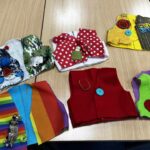

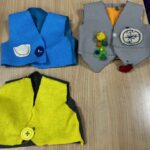
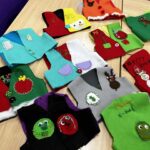

These images are from Year 6’s textiles unit: waistcoats. We decided that, since it was close to Christmas, we would design and make a waistcoat for a Christmas teddy bear. We researched famous designers including Vivienne Westwood, Thomas Burberry and Stella McCartney. We commented on their work and said what we liked and disliked about it. Using inspiration from all three designers, we designed our Christmas waistcoats. We learnt how to tie a knot in the thread with ease, master a running, blanket and backstitch before securing the stitch with a tight knot. We attached decorations to our waistcoats and considered which stitch would be suitable each time, be it functional or decorative. We were very proud of our achievements and many of us were excited to wrap them up as Christmas presents for family and friends.
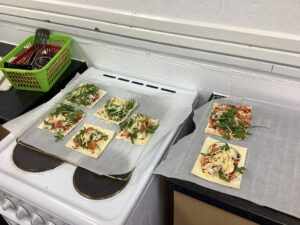
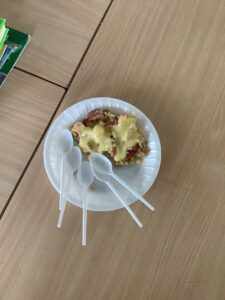
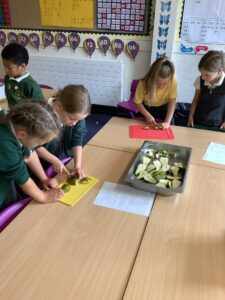
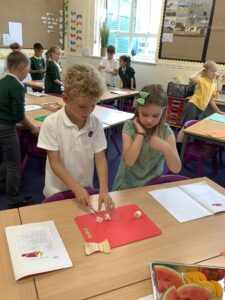


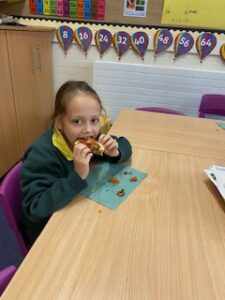
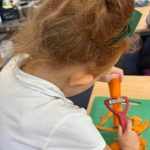
In this D.T. unit, Year 3 made different products using foods that were both imported from abroad and grown here in the UK. Their final product was a fruit crumble using all locally sourced ingredients that were in season at the time.


